SKIN
Skin in the Picture: A Better Vocabulary for Beauty Photography
Describe skin in beauty photography with precise language about light, finish and texture, without turning normal visible features into faults.

To describe skin in beauty photography, separate what the image shows from what you can know about the person. You can describe a reflective highlight, a matte finish or visible texture. You cannot diagnose skin, identify a routine or establish how healthy someone is from a photograph.
That distinction opens up more interesting writing. Instead of calling every successful portrait flawless, a caption can tell readers how the picture works. The words become more specific, and the person in the image is no longer measured against an impossible absence of texture.
Replace verdicts with observations
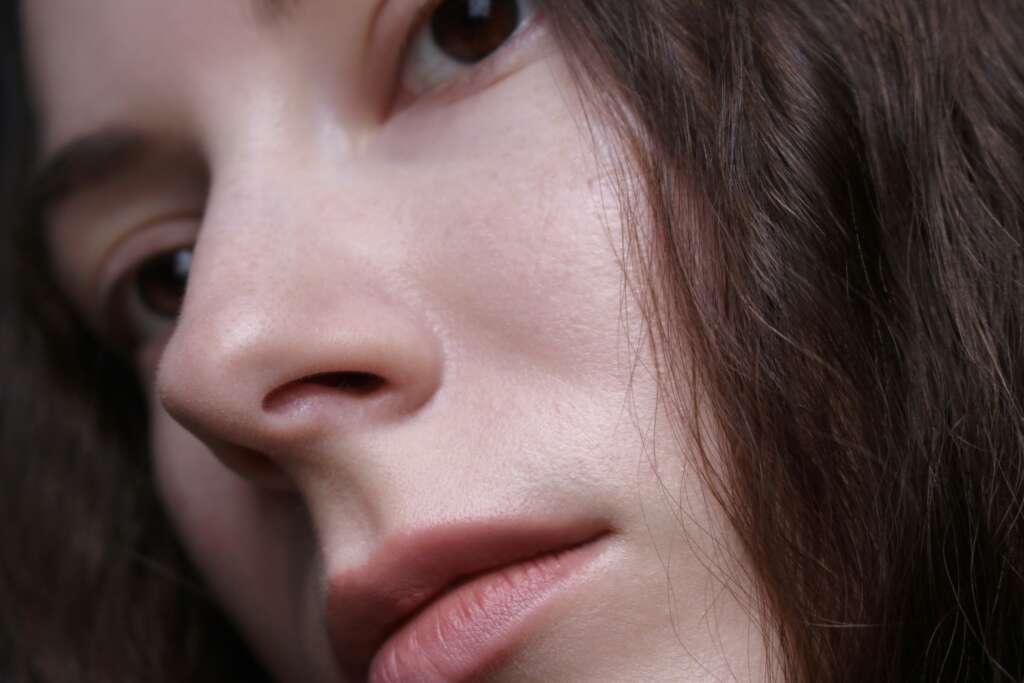
Words such as perfect and problem-free deliver a judgment without much information. Try describing the visible relationship instead: light gathers along one side of the face; a softer finish surrounds a more reflective area; the close crop preserves fine texture.
These descriptions do not require a negative comparison. You do not need to say the skin is beautiful despite visible lines or pores. That wording still frames normal features as obstacles to beauty. Describe the image directly and let the detail belong to it.
Distinguish skin from the photographic effect
A bright area may result from lighting, product finish, exposure, editing or several factors together. Unless you have verified production information, avoid presenting one explanation as fact. “The portrait has a luminous effect” is different from asserting that a particular product caused it.
If the team provides details, attribute them accurately. A makeup artist’s explanation of the intended finish can help readers understand the process. Keep that account separate from claims about treatment results or lasting changes to skin, which require a different kind of evidence.
Describe texture at the scale where it appears
A close-up reveals details that a full portrait may not. Neither is the complete truth of a face. When discussing texture, consider the image size, crop and viewing distance. A detail that becomes prominent at high magnification may be barely noticeable in ordinary interaction.
This does not mean hiding it. It means resisting the habit of turning enlargement into a defect-finding exercise. A close-up can reveal the interaction of makeup, light and skin without making correction its central purpose.
Ask what retouching is meant to communicate
Before editing a beauty image, define the purpose of the retouch. Is the task to remove a distracting object, adjust color consistency or substantially alter the appearance of the face? Those choices have different implications for what the final picture represents.
For an editorial team, discussing the scope in advance helps prevent an automatic progression toward uniformity. Preserve an accurate record of significant changes where it matters to the story. Do not use an altered image as evidence that a product created a result it did not demonstrably create.
Keep product language proportionate
A beauty feature can describe a product’s stated finish or the team’s experience of applying it, with clear attribution. It should not turn a visual impression into a medical or performance claim. A photograph alone cannot establish that something repaired, healed or permanently changed skin.
If an article moves into skin conditions or treatment advice, it needs qualified sources and appropriate review. This piece stays with visual language because that is the subject it can responsibly explain. Creative discussion becomes stronger when it knows what kind of claim it is making.
Write a caption that adds information
A useful caption might identify the styling intention, the visible effect and the credited contributors. It does not need to repeat the headline or fill space with praise. A sentence about a soft surrounding finish making a defined eye more prominent gives the reader something to notice.
If the subject has shared a personal experience, use their verified words with permission and context. Do not infer confidence, insecurity or emotional recovery from their expression. A portrait can suggest a mood without proving a biography.
Read the sentence from the subject’s position
Before publishing, consider whether the wording describes the image or passes judgment on the person. A useful edit often removes an unnecessary implication: that visible age needs apology, or that confidence can be inferred from an expression. Keep the specific visual observation and discard the invented personal conclusion.
Questions about skin and beauty imagery
Is “flawless” always the wrong word?
It is often less informative than a concrete description and can imply that visible texture is a fault. Consider whether a more precise word would explain the image better.
Can a beauty image show natural texture and still feel polished?
Yes. Composition, styling, lighting and editing can create a considered image without removing every visible feature of skin. Texture and intention are not opposites.
How should a writer discuss a product used in a shoot?
Verify the product and its role with the team, describe the application or intended finish accurately, and avoid claiming the photograph proves a health benefit or lasting result.
What should a reader remember about a close-up?
It is a particular image made through choices about light, crop and reproduction. It can be expressive and informative without functioning as a standard against which to inspect your own face.
Explore more
The Mirror Is Not a Mood Board: Separating Personal Skin From Editorial Reference
Browse Skin for more from LEGACIQ.