


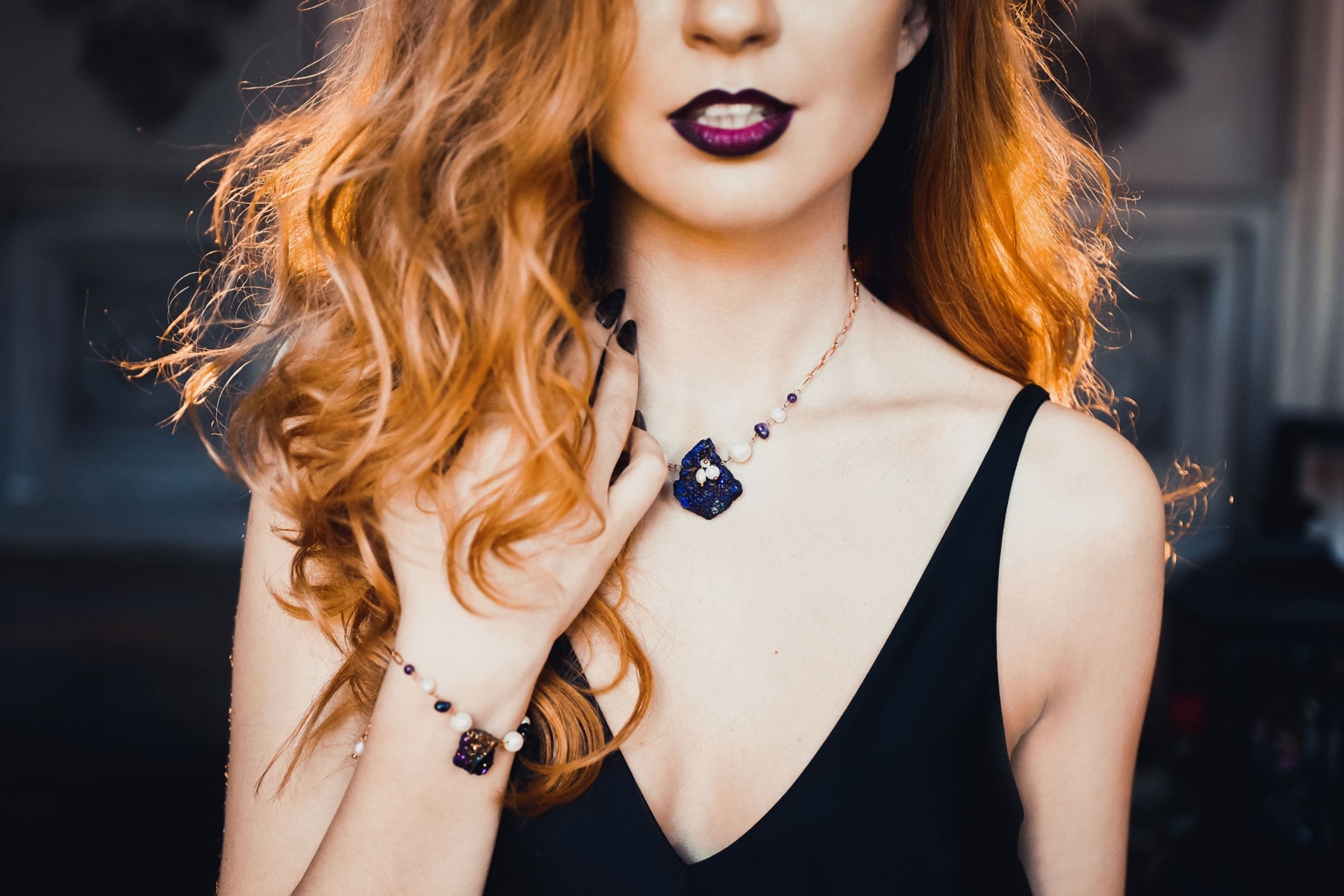
A precise face can make a single unruly mark feel electric. Imagine a portrait with a bare-looking mouth, brushed brows and one broad sweep of blue sitting above the crease of an eyelid. The color does not trace the eye. It occupies its own space.
This is a beauty editorial concept about placement rather than abundance. Its central question is simple: how much can one gesture change the way we read a face? The answer depends as much on what surrounds the mark as on the pigment itself.
Give the color somewhere to go
Begin with a restrained frame: a plain background, an open neckline and hair arranged away from the temple. A patterned collar would introduce another rhythm; a large earring would create a second focal point. Neither is forbidden, but each changes the balance. For the first portrait, let the blue have the conversation to itself.
The edge is the interesting part. A perfectly ruled stripe reads as graphic design. A visible brush edge preserves the action that made it. Photograph both possibilities before deciding which belongs to the story. Use makeup intended for the area where it is applied; an editorial idea does not require an improvised material.
Build a sequence, not seven versions of one frame
Move from a straight portrait to a profile, then to a closer crop that lets the color almost escape the photograph. Keep the light consistent so the changes come from angle and expression. A lowered eyelid can turn the same mark from an accent into the subject.
The final image should leave room for uncertainty. Is the stroke a deliberate ornament, a fragment of a larger painting, or the beginning of another look? That unresolved edge gives the editorial somewhere to live beyond its first glance.