


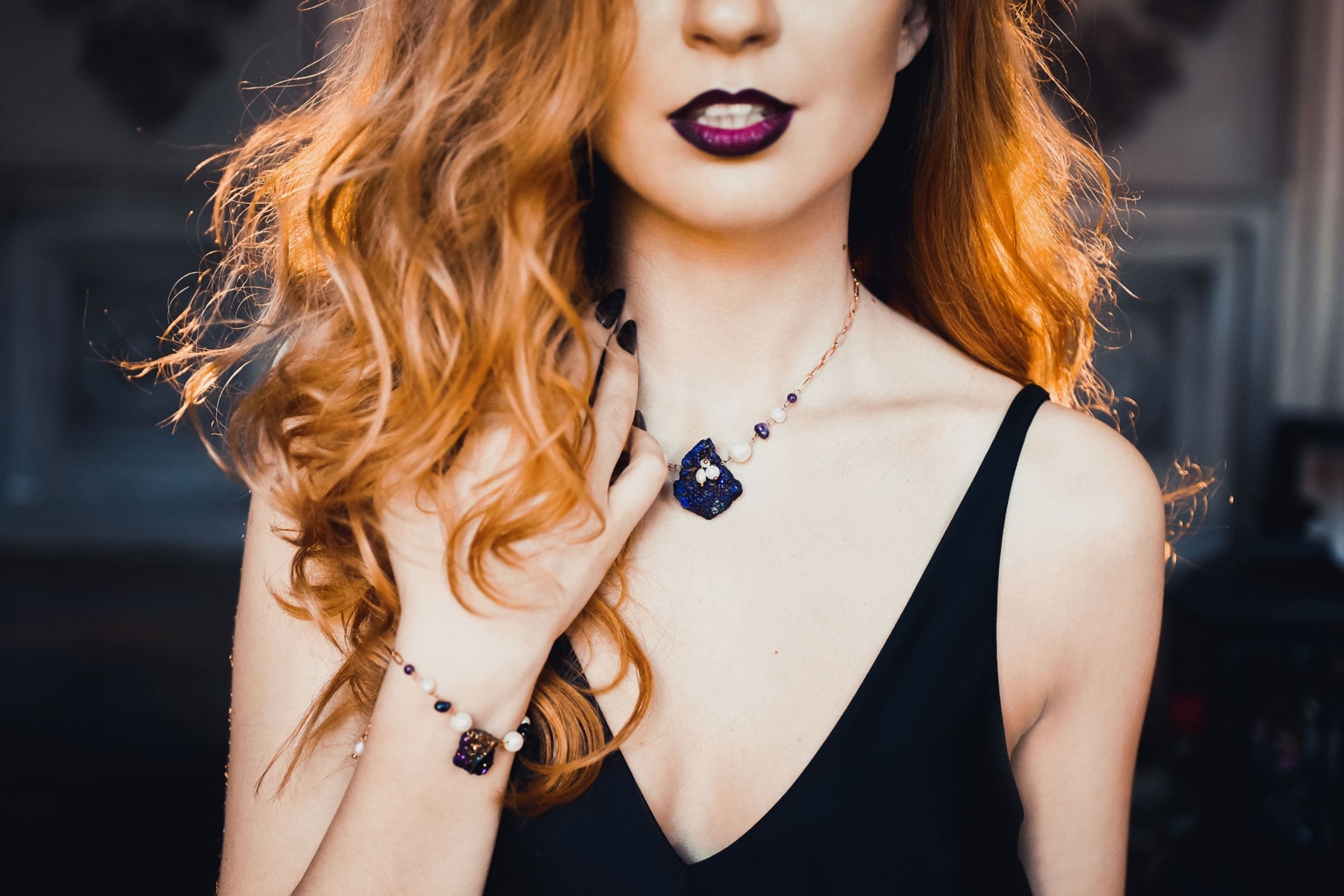
A makeup look becomes easier to read when it makes a decision. A deep red mouth against a quiet face says something different from the same mouth surrounded by metallic eyes, sculpted cheeks and a glossy finish. Neither approach is inherently better. They simply give the viewer different instructions.
Choosing one strong feature is a useful creative constraint. It asks the wearer or artist to decide where the story begins, then to make the supporting choices earn their place.
Choose the focal point before the finish
For a lip-led look, consider the outline as carefully as the color. A crisp edge introduces precision; a softened edge suggests movement. Try the look with the clothing you intend to wear. A severe collar can sharpen the impression, while a faded cotton shirt may make the same lipstick feel unexpectedly relaxed.
If the eye is the focus, look at the face from conversational distance. A detail that seems enormous in a close mirror can become almost invisible across a room. Build the composition for the setting where it will be seen, whether that is an intimate portrait or an evening event.
Supporting does not mean absent
The rest of the face still matters. Brows, lip texture and the finish of the cheeks form the background against which the chosen feature appears. Quiet choices can be intentional and finished without being equally emphatic. They need not erase freckles, natural lip color or the small asymmetries that make a face familiar.
Before adding another step, take a photograph and look away for a moment. When you return, notice where your attention lands first. If it misses the intended feature, adjust the competing element rather than automatically adding more product. A strong look often comes from editing the relationship between details, not increasing the volume of each one.