


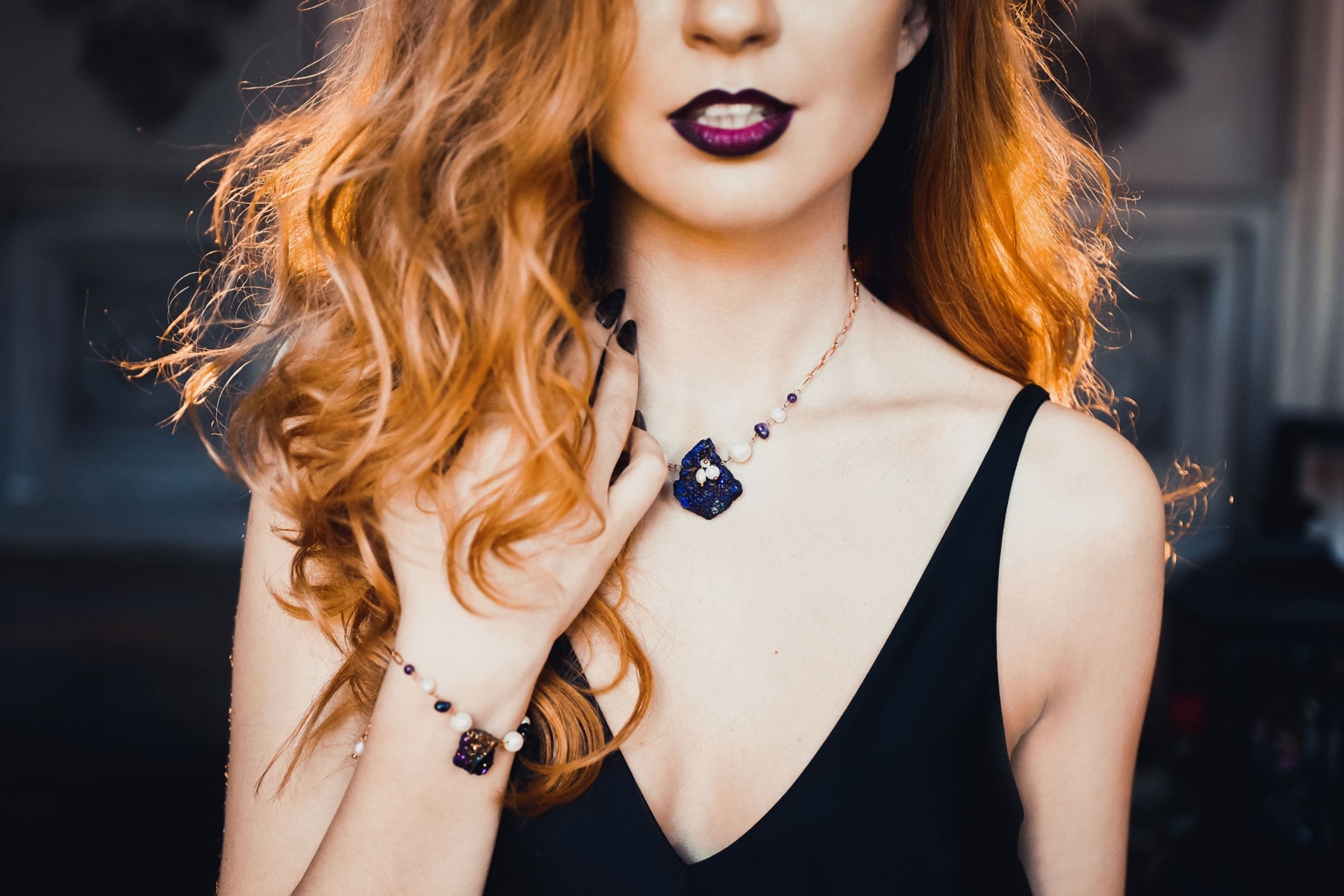
Hair is often discussed through individual details: a curl, a fringe, a polished section, a loose end. Step back and those details become a larger shape. That silhouette can frame a face, balance a neckline and establish the rhythm of a photograph before the viewer notices a single strand.
Beginning with shape leaves room for different textures to remain themselves. The question becomes how the hair occupies space, rather than how closely it can imitate someone else’s reference image.
Look from more than one angle
A style that appears compact from the front may have considerable volume in profile. A center part creates a different relationship to the face than an off-center one. Photograph the front, side and back before making major adjustments. The strongest view may suggest a different portrait from the one originally planned.
Clothing belongs in this conversation. A high collar can compress the space around longer hair; an open neckline may give the same shape more room. Instead of immediately changing the hair, try changing the garment. A small styling decision can solve what first looks like a hair problem.
Preserve the details that carry character
Uniformity is one possible finish, not a universal requirement. A change in curl size, a silver strand or a naturally uneven edge can give a portrait specificity. Discuss the intended finish with the person wearing the style rather than treating every departure from a reference as something to correct.
For the final image, allow a little movement. Turn the shoulders, lower the chin, or let the subject walk into position. Observe which parts of the shape hold and which shift. The most convincing silhouette is often one that can survive a gesture. It should frame a person in motion, not require the person to become a stand for the hair.